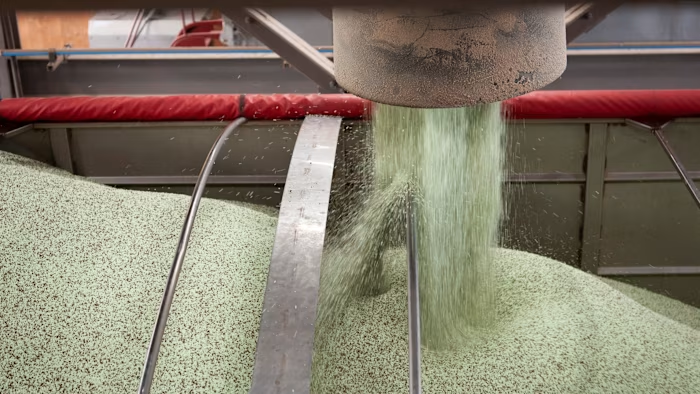

The Financial Times highlighted the spectacular reversal of the global urea market since—and even before—the end of hostilities in the Persian Gulf. The price of urea (the world’s main nitrogen fertilizer) has reversed sharply, falling by around 50% from its April peak, when it approached $920 per tonne, to around $475 per tonne, returning to its pre-war level. Phosphate fertilizers, by contrast, escaped the crash, with prices rising by “only” 10% since the spring.
This sharp decline can be explained by two major factors that emerged at the beginning of the summer:
1. “Demand destruction”: Caught off guard by the surge in prices during the spring, farmers—particularly in the Northern Hemisphere—simply reduced their fertilizer purchases or shifted to crops requiring less nitrogen, such as soybeans. However, the decline was limited because Northern Hemisphere countries had already purchased most of their fertilizers before the conflict erupted, whereas Southern Hemisphere countries typically make their purchases much later in the season.
StoneX estimates that global nitrogen consumption has declined by approximately 5%. Yet 50% of global agricultural production, across all crops, depends on nitrogen fertilizers, with urea being the primary one. Although prices have fallen, the damage has already been done.
2. Anticipation of peace: Futures markets immediately priced in the easing of tensions in the Middle East and hopes for diplomatic agreements, causing prices to fall even before maritime logistics had fully recovered through the Strait of Hormuz.
However, this price decline has two sides. According to FAO economists, the 50% drop is not necessarily a sign of a healthy market but rather reflects a slowdown in agricultural production, raising concerns about the yields of upcoming harvests.
Moreover, the crash currently affects only nitrogen fertilizers. Phosphate fertilizers remain very expensive because of the high cost of sulfur. Half of the global sulfur market passes through the Strait of Hormuz.
Although less geographically exposed than nitrogen fertilizers, phosphates (DAP) and potash (MOP) saw their prices rise by 10% during the spring. This increase is driven by the doubling of sulfur and ammonia prices, two essential inputs in their production.
IMPACT ON FARMERS
The impact on the ground has been severe for farmers. In Morocco, for example, imported fertilizers recorded price increases ranging from 40% to 60%, depending on the formulation, with phosphate nitrates and magnesium-based fertilizers being particularly affected.
In the United States, in an effort to cushion the blow on farms facing unsustainable fertilization costs ahead of the harvest season, the government temporarily suspended certain import duties on phosphate fertilizers, particularly those imported from Morocco.
Despite the beginning of geopolitical stabilization, the World Bank and IFPRI estimate that it will take many months before supply flows return to normal. The global fertilizer price index is expected to post an average increase of more than 30% over the course of 2026, maintaining significant pressure on farmers’ profit margins.