

I. DEFENSE AND ILLUSTRATION OF THE INTERCONNECTION OF THE 3 PILLARS OF ONE HEALTH
The “One Health” concept is a multisectoral and collaborative approach that integrates human health, animal health, and ecosystem health. This model is viable. A viable model is one that, beyond being theoretically sound, is both practical and applicable, particularly in real-world contexts. The question of environmental sustainability remains. Environmental sustainability simply refers to the long-term preservation of our ecosystem, biodiversity, and environment for the benefit of present and future generations.
Based on these three key elements, the “One Health” approach constitutes a viable model for achieving environmental sustainability. Indeed, this approach promotes convergence and the systemic thinking required to address most of the complex and interdependent challenges we face today.
Take, for example, climate change, biodiversity loss, and soil degradation. These are not isolated issues; they do not exist independently. They are interconnected problems. Therefore, we need solutions that are at once complex, simple, and integrated. However, solutions often stem from siloed thinking or disciplines working in isolation.
As a result, many interventions prove ineffective. The “One Health” approach represents a concrete solution—certainly not a miracle one—but one that has proven effective in addressing a large part of this issue. For instance, deforestation disrupts ecosystems and forces wildlife closer to human populations.
This increases the risk of zoonoses and the transmission of diseases to humans. This is a key example showing that through genuine collaborative and systemic thinking, we can tackle some of today’s complex challenges. Moreover, the “One Health” approach has proven its effectiveness in practice.
The “One Health” concept is preventive
For example, there are publications and real-world applications of the “One Health” concept in countries such as Kenya, where it helped control rabies, and in the Democratic Republic of Congo, where it was used to combat Ebola outbreaks. These experiences demonstrate the effectiveness of this approach. When properly implemented through collaboration between key stakeholders and disciplines, it can truly deliver expected outcomes. It is important to note that the “One Health” concept is fundamentally preventive.
It has often been criticized that massive resources are allocated to managing diseases or epidemics. However, instead of managing them, we could prevent them. Take COVID-19 as an example: the nearly $14 trillion spent on managing the crisis could have been avoided through a global health approach like “One Health,” aimed at preventing outbreaks and large-scale spread.
Furthermore, the Food and Agriculture Organization of the United Nations (FAO) has indicated that the “One Health” approach could help combat antimicrobial resistance, one of today’s major global challenges. Projections suggest that by 2050, around 10 million human lives could be at risk due to this issue. The “One Health” approach appears to be a key solution.
Some critics argue that the “One Health” concept is complex—and that is entirely true. Complexity is part of reality.
It simply indicates the need for integrated and multidisciplinary thinking to address these interconnected challenges. While some may argue that these concepts are not always effectively implemented, this highlights the importance of convergence. It is not a miracle solution, and collaboration across disciplines is essential. Without it, expected outcomes will not be achieved.
Sustainable development and the “One Health” approach share a fundamental basis: systemic thinking. Both rely on the same approach. How does “One Health” contribute to environmental sustainability? It has already been shown to prevent zoonoses through ecosystem protection.
It also reduces antimicrobial resistance through better antibiotic use and improves agricultural sustainability, for example through intercropping or biodiversity promotion. Its adoption by major organizations such as WHO and FAO gives it strong legitimacy.
Case studies show its contribution to improving water quality, combating diseases, and strengthening surveillance systems. It also generates significant cost savings by encouraging the reduction of polluting chemicals.
It targets the root causes of environmental problems, as “One Health” prioritizes prevention over correction. Environmental sciences play a crucial role here, with increasing advocacy for biopesticides.
Environmental considerations are integrated, notably through alternatives to chemical pesticides and the use of biological control methods, such as microorganisms used to regulate or restore ecosystems. Thus, the environment is not overlooked.
Is the “One Health” approach inapplicable in Africa?
The “One Health” approach is scientifically viable, forward-looking, and sustainable. However, while it can serve as a viable model, it is not sufficient on its own to address global climate challenges, which have already caused human losses, as seen in recent floods.
Additionally, implementing this approach in low- and middle-income countries—particularly in Africa—raises challenges. Maintaining animal health and ecosystems requires significant resources.
How can this approach be implemented in countries like Morocco or across Africa? Can it prevent climate change-related issues? The “One Health” concept is based on interconnected sectors and disciplines.
Focusing on only one dimension leads to neglect of others. Human, animal, plant, soil, ecosystem, and environmental health are all interdependent. If one pillar collapses, the entire system is affected.
The approach embraces complexity because it reflects reality. Data fragmentation is a universal challenge in complex systems, and decisions are often probabilistic.
“One Health” is an integrated, preventive model adopted globally, though still evolving. Ultimately, it is not just viable—it is necessary.
A complex but improvable approach
Having a framework under development does not undermine its viability—it simply shows that it is evolving. The “One Health” approach is not perfect, but that is not the point.
Is it the most viable model we currently have? We believe so. It has weaknesses, but they are transitional.
Like climate policies, its implementation may be gradual but effective. Standardization efforts led by WHO and FAO are already underway.
Complexity is not a flaw—it reflects reality. Simple models fail because they ignore interconnections.
The “One Health” approach already influences integrated funding models and is based on three pillars:
- It reflects reality rather than simplifying it;
- It is effective in practice, reducing zoonoses and antimicrobial resistance;
- It addresses root causes, prioritizing prevention over treatment.
“One Health” protects the environment and biodiversity
Many countries have adopted the “One Health” concept, including Zimbabwe and South Africa, where national biosafety frameworks ensure inclusive implementation.
Technologies such as metagenomics and genomic surveillance allow better understanding of environmental pathogens and antimicrobial resistance.
In Morocco, biosafety guidelines have been implemented to address climate-related risks and zoonoses, supported by advanced tools like AI and sequencing technologies.
Global initiatives, including UN conventions, further reinforce the integration of climate and environmental considerations.
This contributes to biodiversity conservation, as reflected in frameworks like the Convention on Biological Diversity.
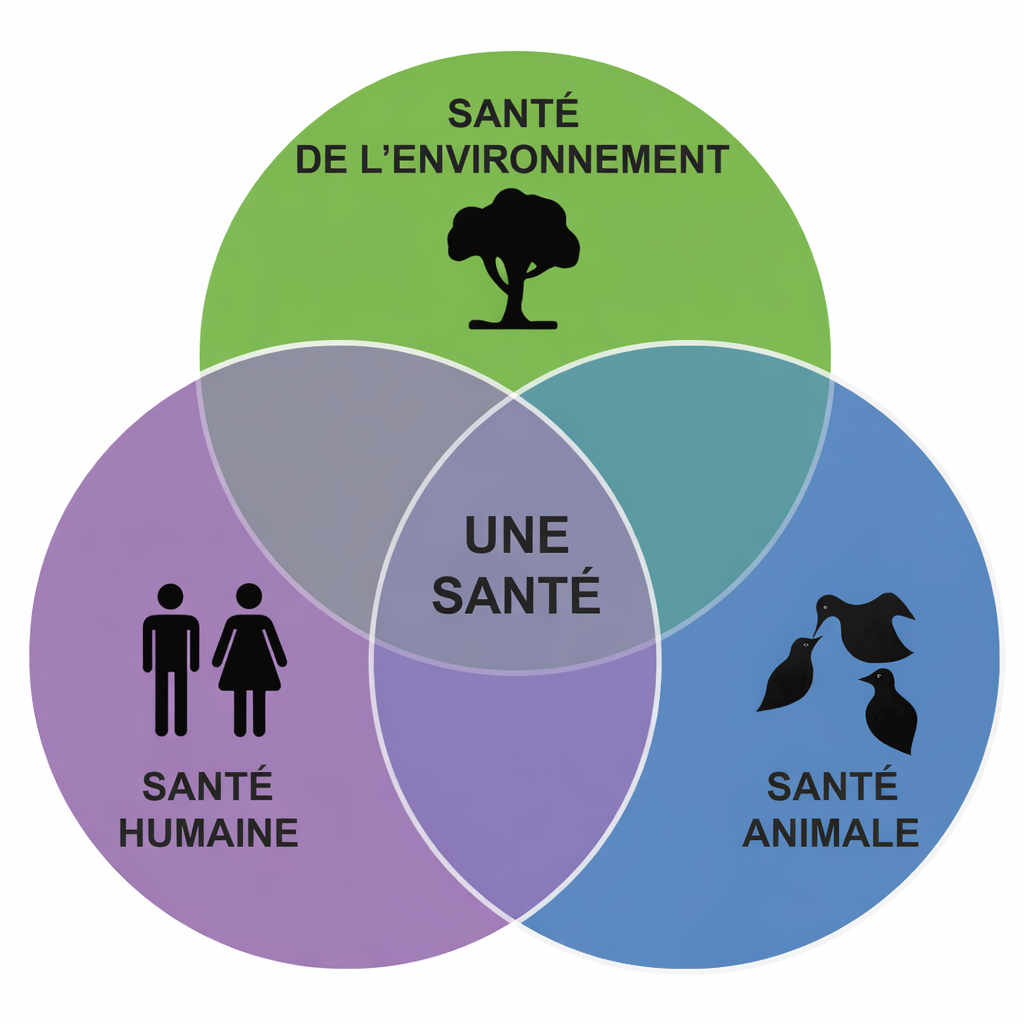
Fig 1 - One Health Approach (source : Wikipédia)