
PRECISION NUTRIENT MANAGEMENT
By Pamela Pali, Shamie Zingore, Thomas Oberthür, and Amy Sullivan
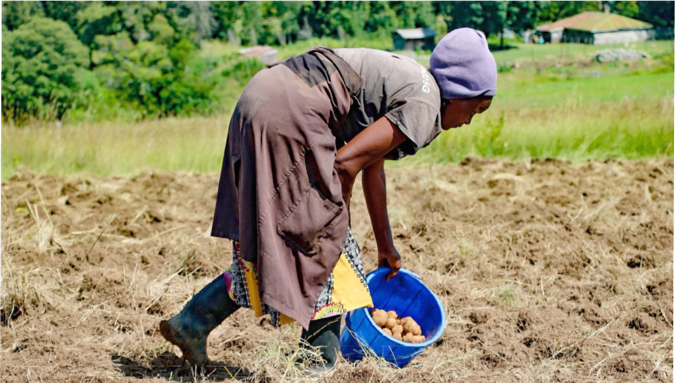
Jane Njeri planting potatoes on her farm in Nyandarua County, Kenya. APNI/M.Waweru
Sub-Sahara Africa is characterized by high incidence of hunger and malnutrition due to low agricultural productivity. Low soil fertility, declining nutrient stocks, erratic rainfall, limited use of improved inputs, and inadequate access to knowledge and advisory services continue to constrain crop production.
Women are central to African agriculture. They account for approximately 70% of the agricultural workforce and contribute most of the labour required for planting, weeding, harvesting, and post-harvest handling (USAID, 2024). They also provide much of the family care-related work, including cooking, cleaning, water carrying, and elderly care (Chivenge and Connor, 2026). Women also have inequitable access to agricultural inputs and services and fewer land rights; 15% of land is controlled by women (USAID, 2024). Socio-economic, productivity, and time burden challenges result in a large gender productivity gap that can be greater than 30%.
Africa also has the world’s youngest population (Oluwatayo and Ojo, 2024). Despite agriculture offering significant opportunities for employment, innovation, agribusiness development, and climate resilience, many young people face high levels of unemployment and underemployment, limited access to land and finance, inadequate technical skills, weak market linkages, and negative perceptions of agriculture as a low-return sector (Mac Té and Sy, 2025). Young women are particularly disadvantaged because of intersecting gender and age-related constraints.
Reducing these inequalities is not only a social objective but is also essential for improving agricultural productivity. PA provides an opportunity to address some of these challenges, but only if technologies are designed and delivered in ways that respond to the different realities faced by women and youth.
Precision agriculture beyond technology
PA is a data-driven approach that reduces temporal, metrical, structural, and translational uncertainties in smallholder farming systems, enabling more informed and site-specific management decisions. Time-, location-, and individual-level data can be used, combined with other information, to guide variable-aware management decisions that boost efficiency, yields, quality, profits, and sustainability (Andujar, 2023). PA decision support tools, such as mobile phones, satellites, drones, sensors, the Internet of Things, robotics, and farm automation, help monitor weather, soil, yield, diseases, and pests (UNDP, 2021). Across Africa, digital advisory platforms, mobile applications, remote sensing, geographic information systems, and soil diagnostic tools are becoming increasingly available to smallholder farmers. These technologies can support better decisions on planting dates, fertilizer management, irrigation scheduling, pest control, and harvesting (Njoroge et al., 2026).
Women and youth in Africa commonly use digital decision support tools (e.g., smartphone applications, SMS advisory systems, and AI-enabled extension tools), soil and crop sensing tools (e.g., portable nutrient meters), and drone services for field scouting, often provided as bundled services. For women, PA can reduce labor demands, improve access to information, increase productivity, and strengthen household food security. For youth, it creates new opportunities for employment and entrepreneurship through digital advisory services, data collection, equipment hires, and technology support businesses.
However, access to technology alone is not enough. Farmers must also have the skills, resources, confidence, and enabling environment needed to use these tools effectively. Without deliberate efforts to address existing inequalities, PA risks widening rather than narrowing the gap between those who benefit from innovation and those who do not.
Overcoming the barriers
Long-standing challenges faced by female and youth farmers in traditional agricultural settings also apply to PA. These challenges are grouped into broad categories including infrastructure, information, skill, participation and inclusion, technology-based, financial, policy, etc.
Some of these barriers are common to all forms of digital agriculture. Others are unique to PA because they relate directly to the affordability, accessibility, and usability of advanced technologies such as sensors, drones, digital platforms, and data-driven decision-support systems. Distinguishing between these different types of constraints is important because it helps identify where targeted interventions are needed to ensure that PA is both productive and inclusive. Table 1 summarizes the major barriers affecting women and youth and assesses their implications for the successful implementation of PA.
| Category | Gender and youth related challenges | Effectiveness in delivering PA strategies |
|---|---|---|
| Information Generic |
Device/internet access barriers for women and infrastructure and costs that affect the youth. Many women lack access to devices (mobile phones), computers, and reliable internet, which hinders their ability to use digital tools and receive timely information on weather, markets, and best practices (FAO, 2023). Only 27% of women in Africa have internet access, and only 15% can afford to use it (FAO, 2023). |
Moderate: PA can work with low-tech (SMS for timing), but full PA requires devices/internet; partial PA strategies still possible. |
| Skills Bidirectional |
Non-tailored training for women and skill deficits for youth. Digital literacy gaps are common, with training programmes and extension services often not tailored to women’s specific learning needs (Bisma et al., 2024, Mittal, 2025, Saha et al., 2024). Rural women face low digital literacy and social norms that hinder their participation in extension services (FAO, 2024), and digital illiteracy is a major constraint for women farmers to be technically empowered (Saha et al., 2024). |
Moderate-High: PA requires higher technical skills than SMS advisories; literacy gaps prevent PA data interpretation and correct use. |
| Participation & inclusion PA-amplified Generic |
Socio-cultural norms and structural constraints may restrict women’s participation in decision-making and their ability to attend training or access resources (Guo and Akudungu, 2023). Negative cultural perceptions linked to women using agricultural machines inhibit technology adoption by women (Guo and Akudungu, 2023). Household power dynamics faced by youth. |
High: PA requires complex decisions; excluding women from decision-making means PA data not being used for their fields, no precision benefits. |
| Financial PA-amplified Generic |
Women face discrimination when applying for credit or participating in programmes, further limiting their adoption of new technologies (KIPPR, 2020, World Bank, 2021). Gaps exist in youth-specific programs, such as inadequate accessible financial products for agricultural technology ideation and uptake, which hinder young people’s development and opportunities (FAO, 2023). |
High: PA requires significant capital; credit discrimination blocks PA adoption while may not block cheaper conventional technology. |
| Policy PA-amplified Generic |
Subsidies and support mechanisms tend to favor larger, male-dominated farms, which reinforce existing inequalities (Chivenge and Conner, 2026). | High: PA tools can be expensive; if subsidies exclude smallholder women/youth, PA becomes exclusive to large commercial farms. |
| Technology Highly PA-specific |
Very little attention has been paid to gender issues in technology development, especially the socio-cultural circumstances of women farmers (Abujala et al., 2022). PA technologies are frequently designed without considering women’s physical needs or cultural context, making them less accessible or practical for female farmers (Abujala et al., 2022). |
High: PA tools unusable for women = no data collection, no precision application, PA strategies fail for female farmers. |
| Infrastructure Gaps Most PA-specific |
Women and youth face PA-specific barriers rooted in infrastructure gaps, such as poor infrastructure, affordability, and skill deficits. They have limited access to finance and inputs, and higher costs of PA tools such as sensors, drones, and data platforms, which are often out of reach for women and youth due to limited access to credit and financial services (FAO, 2023, UNDP, 2021). | Critical: Without affordable access/solutions, PA strategies cannot be implemented for smallholders. |
What is the role of precision agriculture in addressing gender inequalities?
PA is designed to reduce decision uncertainty across the production cycle; however, men and women experience fundamentally different types of uncertainty due to divergent access to devices, skills, decision-making power, finance, and policy support. Women face uncertainty rooted in socio-cultural exclusion from technology use and credit discrimination, while youth face uncertainty due to inadequate financial products and mentorship gaps.
Based on Rowe (1994) and Marra et al. (2003), several types of uncertainty are associated with each challenge. These include technical uncertainty (yield and production variability), price uncertainty (market fluctuations), tenurial uncertainty (land ownership), political uncertainty (government policy), personal uncertainty (family welfare), and people’s uncertainty (relationships with others).
Marra et al. (2003) further categorized uncertainty in the context of technology adoption, including subjective (perceptions of risk and outcomes), epistemic (lack of knowledge or experience), random (inherent variability), and learning uncertainty (uncertainty reduced through experience).
Women and youth face fundamentally different uncertainty profiles than men in PA. Men primarily face technical and price uncertainty (inherent to farming: will crops yield? what will prices be?) Women face additional uncertainty due to information access gaps (epistemic), social exclusion from decision-making (people’s), and institutional discrimination in credit/subsidies (political). This means PA’s promise to reduce decision uncertainty is unequally distributed: men benefit from data-driven precision decisions, while women face compound uncertainty from both production risks and structural barriers.
A theoretical risk management framework can be created by merging Rowe’s classification of decision-making uncertainty (temporal, metrical, structural, and translational) with the statistical concepts of Type I and Type II (Table 2). Type I and II errors are framed as a concrete checklist that redirects advice toward the prevention of Type I errors (harm/unintended consequences) and Type II errors (missed opportunities for women’s agricultural domains). This classification demonstrates that a woman managing a secondary plot does not just need “more information”; she needs a targeted reduction in specific uncertainties. For instance, a raw weather forecast (e.g., “20 mm of rain expected”) reduces metrical uncertainty for a meteorologist, but it creates translational uncertainty for a smallholder farmer who must calculate what that means for her freshly planted seeds.
Similarly, if PA designers deploy satellite imagery to optimize nitrogen on the husband’s cash crop, they have successfully reduced his uncertainty. If they claim that this helps the entire household, but the woman’s weeding burden increases due to the larger, fertilized canopy, the project has committed a Type I error (false positive impact on women). Conversely, if developers assume that IoT sensors are too advanced for post-harvest storage (a female-dominated domain) and only deploy them for commercial irrigation, they commit a Type II error (missed opportunity), leaving women entirely unserved by the PA revolution.
How does gender influence access to, and adoption of, precision agriculture technologies?
The framework outlined in Table 2 demonstrates that successful PA depends not only on technological innovation but also on understanding how different groups make decisions and manage risk.
First, this framework distinguishes PA-specific barriers from generic digital agriculture barriers, which is important for design. This helps PA projects avoid over-investing in low-level digital fixes when the real constraints are hardware access, usability, and affordability.
Second, the framework improves the targeting of interventions by uncertainty type and decision area, so PA can be tailored to specific decisions rather than offered as a one-size-fits-all package. This makes PA more effective because advisory tools, training, and financing can be matched to the actual production decisions being made.
Lastly, the framework strengthens the case for gender-responsive and youth-inclusive PA as a productivity strategy and equity strategy. The framework goes beyond diagnosing exclusion by providing a practical approach for designing PA interventions that reduce decision uncertainty for different farmer groups.
PA strategies must address gendered uncertainty types (epistemic through training, people through participatory decision support, and political through inclusive policies) to achieve equitable uncertainty reduction across the production cycle. Therefore, effective PA strategies must be gender-transformative, addressing not only device access but also participatory decision support, tailored skills development, inclusive credit systems, and youth-specific innovation grants to ensure PA sustainability.
| Decision Area | Typical Gender Pattern in SSA | Primary Uncertainty (Rowe’s) | Targeted PA Intervention | Error Avoidance (Type I / Type II) |
|---|---|---|---|---|
| Tactical Weather-Based Planning | Women often access weather data second-hand or through radio broadcasts aired during caregiving hours. They require localized forecasts that are directly linked to their specific crop duties. | Temporal and Translational: Uncertainty about when weather events will occur and how to convert probabilistic meteorological data into actionable farm steps. | Interactive Voice Response (IVR) platforms deliver hyper-local, task-specific advice (for example, “Heavy rain tomorrow; delay fertilizer”) that is broadcast at times when women dictate. | Type I: Sending a technical SMS (“70% chance of 15mm precipitation”) that causes confusion and leads to inputs washing away. Type II: Providing forecasts only for the primary cash crop regions, ignoring the microclimates of women’s plots. |
| Timing and Execution of Weeding | Women provide most of the labor for weeding, creating severe time poverty and labor shortages. | Temporal and Structural: Uncertainty about when weeds will peak and how local topography, moisture, and crop rotations interact to dictate distinct weed pressures. | Predictive models combine weather data with Topographic Wetness Indices and rotation history to deliver localized, plot-specific weed management advisories. | Type I: Sending a generic “time to weed” alert that misfires because her plot is in a flood-prone area with different weed dynamics. She wastes limited amounts of labor. Type II: Ignoring weed management in PA systems because modeling smallholder multi-cropping is deemed “too difficult.” |
| Integrated Pest and Disease Management (IPM) | Women routinely scout for pests during weeding and harvesting and manage manual control. Men typically purchase and apply chemical pesticides to crops. | Structural and Translational: Uncertainty regarding pest life cycles on food crops and a lack of translation of safe chemical/biopesticide protocols to female farmers. | Mobile image-recognition apps are optimized to identify pests at the stages women encounter them (e.g. adult weevils in storage) and link them to non-chemical or safe-handling advisories. | Type I: Sending an automated PA alert to “spray fungicide immediately,” which leads to community fines for the woman because she lacks the financial agency to buy the chemical. Type II: Designing pest-prediction algorithms solely for the cash crops managed by men, ignoring the invasive pests decimating household food crops. |
| Input Use on Women’s Plots | Women manage secondary “food” plots on marginalized, highly variable soil, whereas men manage cash crops on better land. | Metrical: Uncertainty regarding the specific spatial variability of soil nutrients on localized, smaller plots. | Handheld, low-cost spectral soil sensors were used by women’s cooperatives (VSLAs) to generate site-specific 4R nutrient recommendations. | Type I: Recommending a 4R fertilizer blend that is accurate but too expensive or unavailable locally, leading to debt accumulation. Type II: Failing to map women’s plots because they are deemed “too small” or economically insignificant for soil sensing purposes. |
| Post-Harvest Handling and Storage | Women manage crop drying, processing, and storage, which are critical for value retention and food security. | Structural and Temporal: Uncertainty about the relationship between ambient humidity/temperature and aflatoxin/mold development over time. | Low-cost IoT moisture and temperature sensors in storage silos are linked to simple visual/audio alarms when thresholds are breached. | Type I: Designing sensors that require English literacy or complex digital dashboards for interpretation. Type II: Viewing PA as solely a “pre-harvest” discipline, missing massive post-harvest value. |
| Access to Advisories and Extension | Extension agents are often male, target male household heads, and deliver advice in technical formats that bypass female farmers. | Translational: Uncertainty in interpreting, communicating, and acting upon agronomic information due to literacy or cultural barriers. | Voice-based AI advisories in local dialects, delivered through community listening groups or interactive radio, are supported by female extension workers. | Type I: Translating raw agron Type II: Assuming women cannot utilize digital advisories due to lower literacy, thereby excluding them from digital rollout. |
About the authors
Dr. Pali (e-mail: [email protected]) is an APNI Senior Scientist, Nairobi, Kenya. Dr. Zingore is APNI R&D Director, Benguérir, Morocco. Dr. Oberthür is Business & Partnerships Director, Benguérir. Dr. Sullivan is Consultant for Gender, Water & Natural Resource-Based Livelihood Systems in Asia & Africa, Pretoria, South Africa.
Cite this article
Pali, P., Zingore, S., Oberthür, T., Sullivan, A. 2026. Gender and Precision Agriculture in Africa: Part 1: Lifting Gender-Based Barriers to Access and Adoption of Precision Agriculture Technologies. Growing Africa 5(1):12-17. https://doi.org/10.55693/GA51.EQTR6688
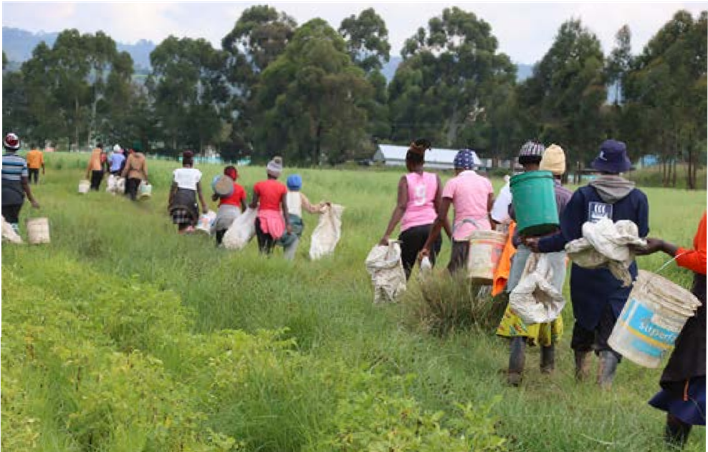
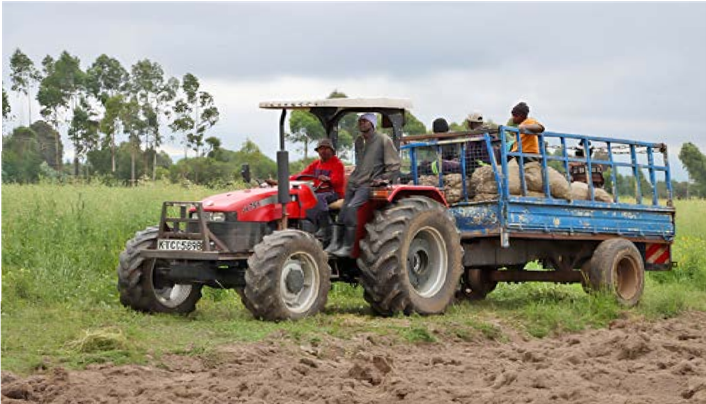
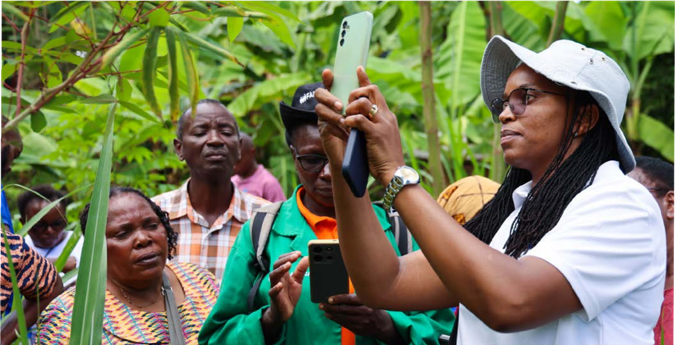
Top: Dr. Esther Mugi, APNI Associate Scientist, demonstrates how to use digital technology to producers. Bottom: Gender differences in the use of harvesting methods and technologies. APNI/M.Waweru
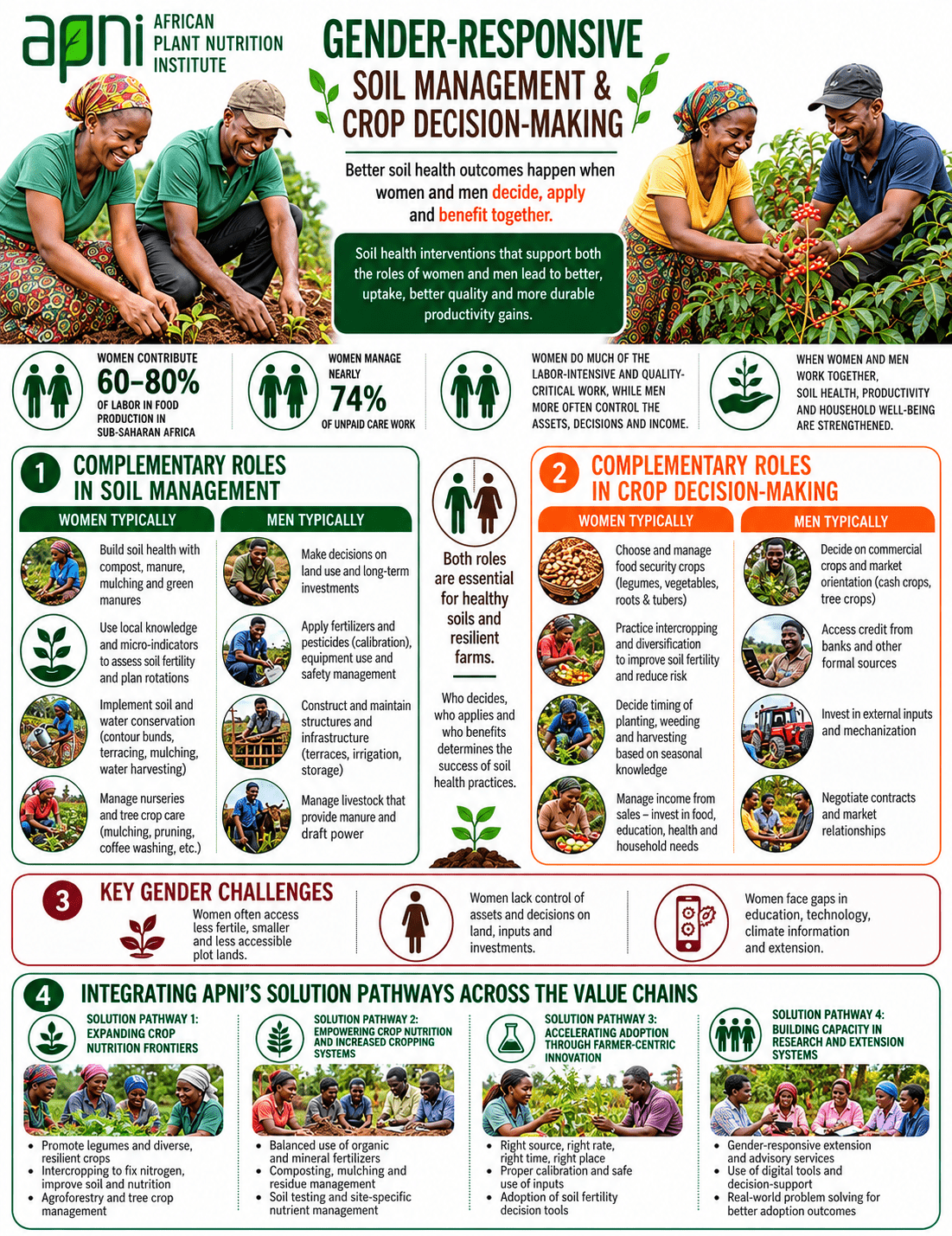
Thanks to APNI and Growing Africa for providing the material for this article
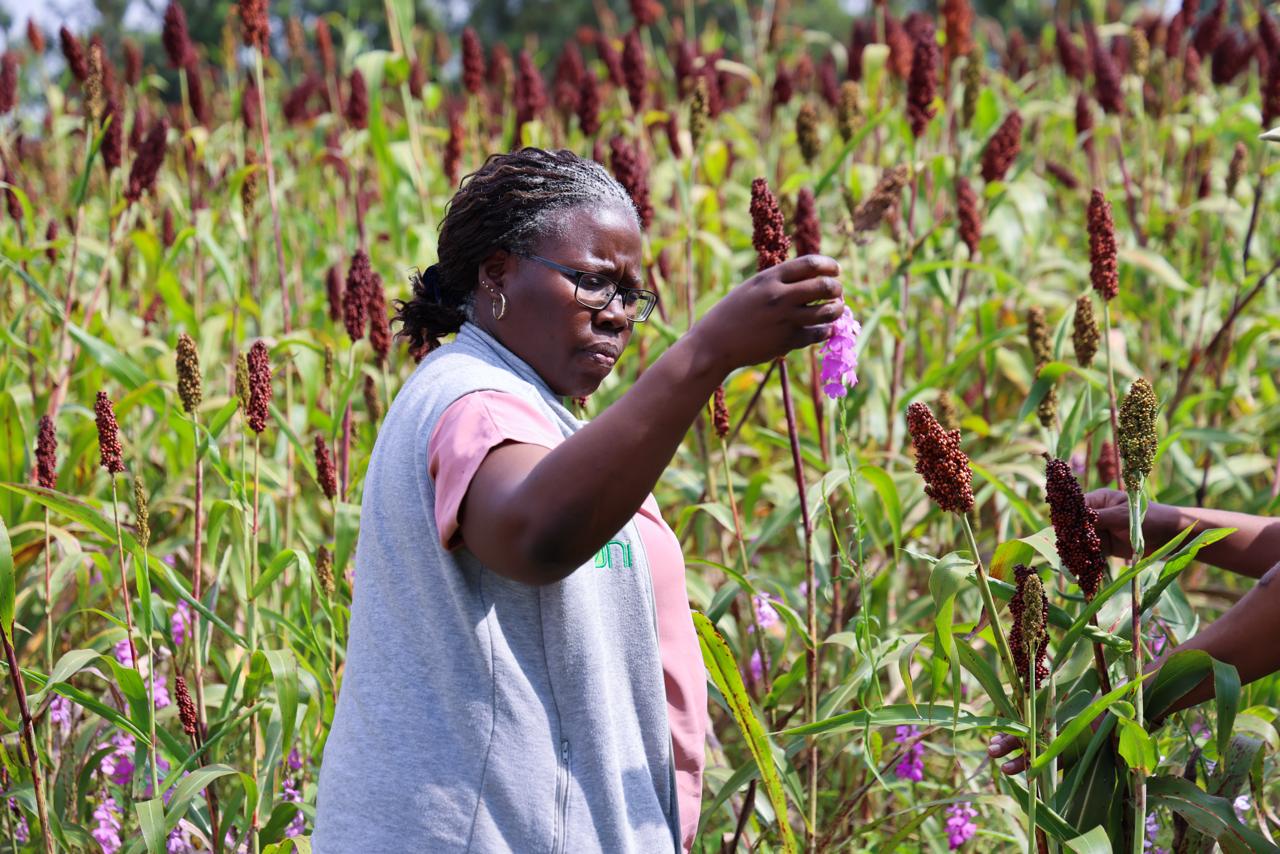
Dr Pamela Pali is a socio-economist and Senior Scientist at the African Plant Nutrition Institute (APNI) based in Kenya. She works on agricultural research, monitoring and evaluation, and gender equity in farming systems.
Before APNI, she worked at :
- FARA (Forum for Agricultural Research in Africa) as a Postdoctoral Fellow.
- ILRI (International Livestock Research Institute) as a scientist leading monitoring and evaluation.
- IITA (International Institute for Tropical Agriculture) as a research and development coordinator.
- CIAT ( Centro Internacional de Agricultura Tropical or in english International Center for Tropical Agriculture).