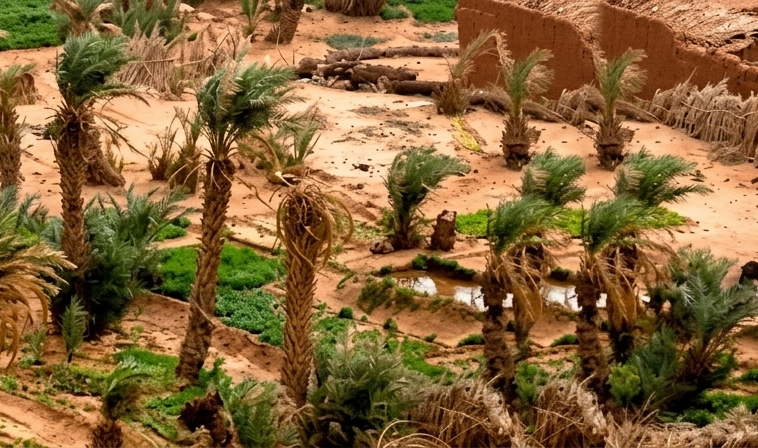

This text is an excerpt from a lecture by the Australian botanist Mark Tester delivered at the Third Laayoune International Forum on Agriculture in Arid and Saline Land (LAFOBA) organized by ASARI (African Sustainable Agriculture Research Institute), an institution of the Phosboucraa Foundation of UM6P. It is preceded by a short introduction by Hicham El Habti, President of UM6P, on biosaline agriculture and agriculture in arid lands.
Our goal is to transform agriculture in marginal and unstable environments, from a constraint into an opportunity. Today, more than 1.1 billion people around the world live in arid and semi-arid zones.
To speak only of Africa, more than 60% of the territory, home to around 200 million people, falls into this category. These lands are often underestimated, yet hold untapped potential. At the same time, more than 800 million hectares, about 6% of the world’s land area, are affected by salinization, and this figure is expected to rise due to growing climate stress, poor irrigation practices, and rising sea levels. There is an urgent need to advance scientific research suited to harsh and arid environments.
It is even more imperative to translate this research into concrete solutions that can be adapted at scale for farmers in arid and saline regions. It is at the crossroads of fundamental research and practical applications that our mission is defined. At UM6P, through ASARI, we have chosen to invest in long-term applied research focused on marginal environments.
Biosaline agriculture and agriculture in arid zones are no longer niche fields of research. They constitute a testing ground for the future of agriculture across a large part of the continent. They are a strategic pillar in the transformation of the African food system. Our research program this year reflects this ambition. It covers the breeding of salt-tolerant crops, the precise mapping of salinity, soil amendments, and associations of beneficial microorganisms.
Research must not remain confined to the laboratory. Science alone is not enough, especially if it does not bring concrete solutions to farmers, and to small-scale producers in particular.
We must design new agricultural models adapted to the realities of water scarcity, soil salinity, and climate variability. Not imported models, but co-developed models, grounded in science, informed by data, and shaped by local knowledge.
Hicham El Habti
Salinity is growing at a worrying rate. It is a global issue. It particularly affects irrigated systems, where unsustainable use, notably of groundwater resources, leads to an accumulation of salts in the soil and increased salinization.
Significant progress in salt tolerance could be achieved more quickly through the neo-domestication of plants that are already highly salt-tolerant. Thus, if we have native plants, or even plants imported from around the world, that are able to grow, for example, in seawater or highly saline water, we can domesticate them, increase their usefulness for human and animal food, and thereby improve our chances of achieving significant progress in tolerance more rapidly.
There is, of course, another path, which allows us to domesticate wild relatives while improving the salt tolerance of existing crops. It is along this path that research has made important advances. One last point, perhaps a little more controversial but which no doubt deserves to be discussed in more depth. Would it not be preferable for humanity and for the planet – particularly in irrigated systems like those of North Africa, the Middle East, Western Asia, and much of South Asia – to make greater use of water, this precious resource, to grow higher-value-added products, especially fresh fruits and vegetables. These are often imported, which generates a very significant carbon footprint. This would contribute significantly to local food security.
We can improve the quality of our diet by fortifying staple foods, but it is no doubt preferable to increase local production and improve access to nutrient-rich food for the whole population, especially the most disadvantaged. This is why our research has evolved: from a study centered on wheat, it has turned toward fresh fruits and vegetables and the improvement of their salt tolerance.
The heat sensitivity of quinoa
From this perspective, I have identified two interesting lines of research: one focuses on quinoa and the other on glasswort (salicornia). A study on tomatoes will follow. My fundamental research work on quinoa, particularly in genomics, was carried out in collaboration with researchers from Brigham Young University. Quinoa is already widely domesticated, but additional efforts are needed to make it a crop that is more accessible on a global scale, particularly for marginal lands. This crop is well tolerant of drought and salinity, but it is extremely sensitive to heat. It is therefore a plant adapted to the Altiplano of the Andes.
Nine days before anthesis (the flowering period), if the plant is exposed to high temperatures, a very significant reduction in its fertility is observed. This is precisely the moment when the formation of pollen mother cells and meiosis occur. At this stage of floral development, the flower is particularly sensitive to high temperatures.
By contrast, a plant collected in the Gulf of Mexico by Rick Yellen, very hot and very saline, a close relative of quinoa, Caenopodium berlanderi, is tetraploid but very distant from Caenopodium quinoa in evolutionary terms, perhaps by a few million years.
Now, this individual, this plant, or this small group of plants, does not exhibit this sensitivity to heat. We have carried out the initial crosses. The mapping of the population is being established.
We are re-sequencing the lines. We are seeking to identify the molecular genetic basis of this difference in heat tolerance at this crucial stage of the plant’s development. This is an example of how wild relatives can be used to try to improve the properties of domesticated or semi-domesticated plants.
Glasswort (salicornia), a plant of the open sea
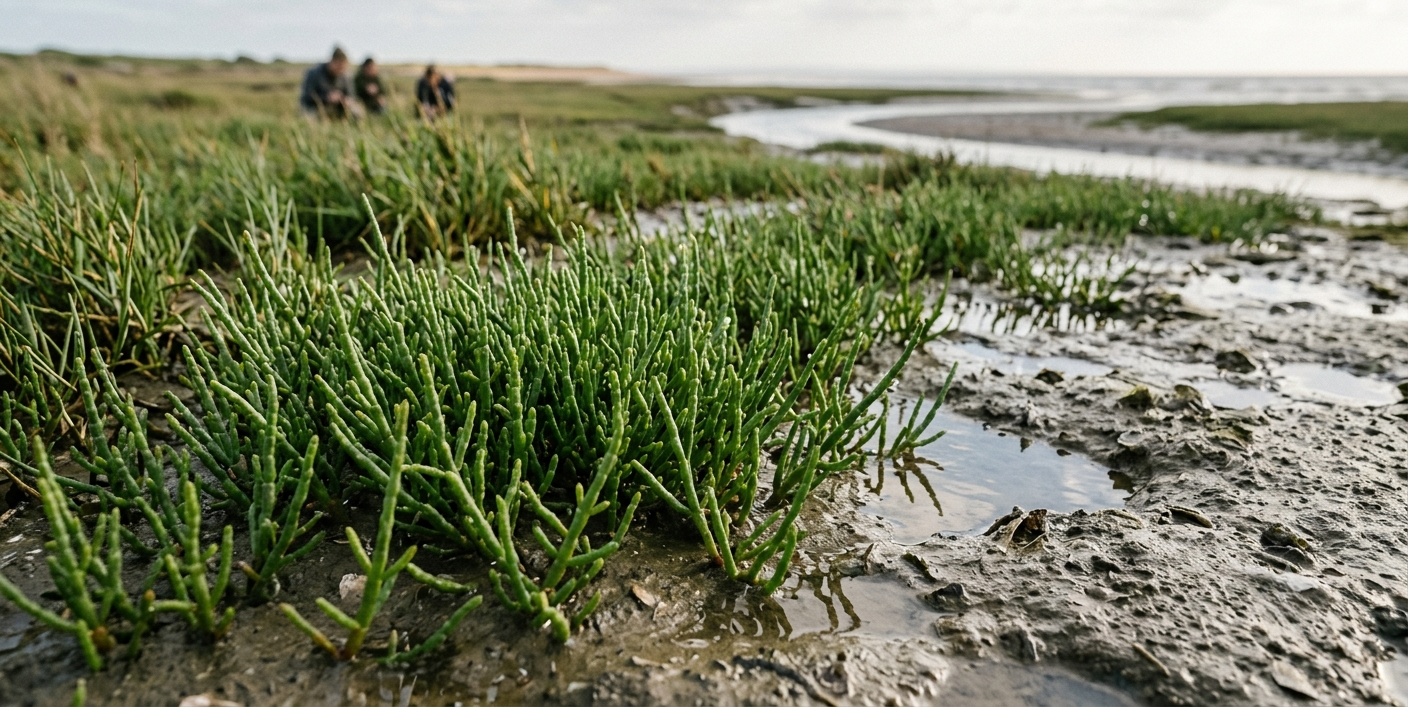
The second example is that of glasswort (salicornia), an extremely salt-resistant plant. It can grow in full seawater. This is remarkable and very unusual. There are indeed hundreds of plant species, but only a few can thrive in full seawater. The mangrove is no doubt the most spectacular example: an entire tree that grows in seawater. But these plants are not to be outdone. Glasswort produces an oil-rich seed.
A fundamental academic question arises: how do we domesticate glasswort, this oil-rich seed? If we manage to obtain a larger seed, we can give the plants greater early vigor. This could really contribute to the production of vegetable oil. But there is also a theoretical question to ask, which could have practical implications in the long term.
Glasswort is unusual not only because it can grow in full seawater, but also because it belongs to a small group of plants capable of accumulating extremely high salt concentrations in their above-ground parts. It is therefore devoid of leaves and has only photosynthetic stems. In these stems, concentrations greater than one molar of sodium chloride dissolved in the liquid can be found, in the vacuoles and tissues of the plant. It is extraordinary, these enormous salt concentrations. Very few plants possess them.
The question that then arises is obvious: which proteins are responsible for this extremely large accumulation of salts in the vacuoles of the above-ground parts of these plants. Very lengthy research on the membrane proteins of vacuoles, and more specifically on those induced by salt stress, made it possible to find that the salt-pumping activity is itself stimulated by salinity. A great surprise: the discovery, among these membrane proteins, of a well-known transporter, SOS-1, initially identified in the plant Arabidopsis. It is a sodium-proton exchanger. It transports sodium. But it had always been thought to be located in the plasma membrane.
The SOS-1 sodium transporter
The SOS-1 sodium transporter, this sodium pump, exhibits a neo-localization. Salt tolerance, and in particular sodium accumulation in glasswort, depends on the localization of this protein, normally present in the plasma membrane but in fact localized in the vacuole in this plant.
We decided to go further and adopt genomic approaches, applying advanced molecular biology techniques, in order to understand the mechanisms of sodium accumulation in these glassworts. We then undertook the sequencing of a large number of genomes. Now, genome sequencing has become much simpler and more affordable in recent years.
So we sequenced several different species of Salicornia, and the situation quickly became more complex, in a very worrying way. We observed the presence of numerous chromosome fragments that move between different chromosomes. We also discovered that among many species of Salicornia, supposed to form only one, some are diploid and others tetraploid.
Some species have two sets of chromosomes, others four. We therefore observe translocations of chromosome arms, whole-genome duplications, which considerably complicates the situation. We therefore opted for a comparative genomics approach, consisting of sequencing many species of Salicornia, but also other related species that do not accumulate large amounts of sodium in their genome, in order to determine whether genomic differences or genomic structures could be linked to this high accumulation of sodium in the shoots of Salicornia.
Well. It didn’t really work. Unsurprisingly, even when you try to focus as much as possible, looking only at close relatives, etc., you end up facing a veritable quagmire of information.
So we opted for a comparative transcriptomic approach, by analyzing the transcripts present in Salicornia under low- and high-salinity conditions, then comparing them to those of related non-Salicornia and non-salt-accumulating species. This analysis allowed us to sort through all these transcripts and identify a small group, the Group 1 genes, whose expression is induced by salinity in Salicornia, but not in the non-salt-accumulating species. And guess what? This group still includes more than 1,000 genes.
So you find yourself overwhelmed with information. We therefore begin to examine the classes of proteins encoded by these transcripts, and we arrive at a relatively small group of iron transporters that could be candidate genes. We then examine these candidates and discover something really interesting. The SOS-1 gene is present. Its expression is strongly induced in several Salicornia species. We observe high levels of SOS-1 expression, strongly induced by salinity.
In the species that do not accumulate salt, the levels of SOS-1 expression are much lower and are not induced by salinity. We therefore think that SOS-1 plays a role, but that the mechanism is far more complex and that it is a quantitative difference, not a simple binary variation. It is not a glaring and obvious difference, such as missing DNA fragments or unexpressed parts of transcripts. It is a quantitative difference.
And this makes much more sense. And so, of course, what we do next is try to identify the basis of this high level of SOS-1 expression and the basis of sodium expression. We are currently analyzing the promoter regions of these transporters and carrying out a comparative analysis of the promoters in order to identify the DNA sequences that differ in the SOS-1 promoter regions in these two groups of plants. This work can now be done quickly and at lower cost. It is accessible to far more people than before.
Wild tomato species
Now, I am going to talk to you about tomatoes.
What we are doing is both a neo-domestication approach of reintroducing wild relatives and a more traditional approach. Here we are working with tomatoes that exhibit different salt tolerances. These are the wild relatives of the tomato.
Our objective was to obtain these salt-tolerant wild tomato relatives, then to domesticate them or to integrate this tolerance into them through traditional breeding methods. We all know that salt tolerance is complex, polygenic, and that there are all sorts of problems. So there is something else important, and that is what I want to tell you about. Tomatoes are generally moderately salt-tolerant plants. They are not exceptional.
And when we look at the wild relatives, we find that there are not that many species that exhibit exceptionally high salt tolerance. There is one, right at the north of the Cape York Peninsula, which we identified growing on tropical beaches, and it is rather interesting, but it is very distant from cultivated tomatoes, I can tell you. And then there are those that grow, notably, in the Galápagos Islands, and which, as early as the mid-1970s, were known for their extraordinary tolerance to salinity.
A variety of Pimpinella folium tomato exhibits very high salt tolerance. We discovered very high-performing individuals under the extreme conditions we faced: brackish-water irrigation in a hot, dusty, and arid environment. These conditions are part of an experimental station of King Abdulaziz University.
Tomato hybrids
We carried out in-depth scientific research on this group of tomatoes, and that was very good, but I wanted to move into action, not just research. Instead of trying to create a fully salt-tolerant and commercially viable tomato – which would have required at least ten years of work – I preferred to graft these tomatoes. You cannot graft with the wild relatives, because you often get weaker plants, but with the F1 hybrids you can obtain very positive results.
Grafting is a very common commercial technique, particularly for tomatoes grown in greenhouses. All the commercial rootstocks for tomatoes and other species are in fact interspecific F1 hybrids. They are often tomato hybrids resulting from the cross between a commercial tomato and a wild relative, though a fairly distant one. Growing these F1 hybrids is relatively difficult. They have existed for several decades, probably around fifty years, but if you consult the catalogs of companies like Bayer, one of the largest seed companies in the world, you find that they offer a very limited number of rootstocks, with the exception of Maxifort, which accounted for about 70% of their sales a few years ago. This hybrid is about 40 years old.
So this is a very inactive area of research. Our lines retain the trace of the wild relatives identified during experiments under extreme conditions. I explored the scientific literature and selected a relatively small number of accessions of *Pimpinella folium* for hybridization. Since then, we have studied many other related species, chosen according to other criteria, notably disease resistance. We have carried out many different hybridizations, and these F1 hybrids make it possible to obtain plants with surprisingly good performance in commercial cultivation.
Most tomato rootstocks were developed for greenhouse production, because the investment involved in obtaining two seeds instead of one, grafting, and growing twice as many plants as those intended for the greenhouse generates significant costs in time, money, and resources. As a result, it was long thought that grafting was economically viable only for high-value production systems. Yet let us not forget that our breeding work on the wild relatives was carried out in the open field, under hostile conditions. And it is important to remember that a very large proportion of cultivated tomatoes, probably 98%, are already strongly affected by the environment and will be even more so by climate change.
62% of cultivated tomatoes are grown in the open field, intended for processing. A significant portion of the rest is grown in the open field for fresh consumption, as well as in rudimentary greenhouses. 6% of tomatoes are grown in rudimentary greenhouses where climate control is very inadequate.
We therefore conducted field trials, with spectacular, impressive results.
Open-field trials
The very first open-field trial we conducted was in northern Egypt, in collaboration with a wonderful colleague from the university. I was at the edge of the field. You can see our grafted tomatoes from the edge of the field. But the seeds are too expensive. In the catalogs, they cost 20 or 30 cents each. Farmers harvest only a dollar’s worth of tomatoes per plant. It is impossible for them to invest 20 cents in a second seed. So why not immortalize the hybridization and see whether we could produce seeds at a lower cost? It worked.
So we patented this process. The process was a spectacular success. We carried out a second open-field trial, also in the north. A little further south, in the Nile Delta, but still in northern Egypt. We were obtaining excellent results, with very large yield increases compared to the non-grafted controls. The experiment is still incomplete, but it greatly encouraged us to continue our efforts. We began to conduct experiments all over the world. The impact on heat tolerance is clearly very significant. The yield is markedly higher, much as we had observed in the Egyptian fields. We expanded our activities internationally and began to carry them out through my company, notably in several countries. Our company is now present in 17 countries.
Because the plants are much more massive when grafted onto our rootstocks – we are talking about plants two and a half times larger – we plant at half the normal density. In central Chile, 30,000 plants per hectare are grown. We were growing 15,000 plants per hectare. The yield, in kilograms per plant, is 3.7 kilos per tomato plant, which is nine times more than the normal yield.
Since you plant at half the density, you obtain a yield two and a half times higher per plant, or an increase of about 25% in yield per hectare. This is therefore a very substantial increase, of which we are, as I said, very proud. Our plants stay green longer, constantly produce new clusters and new branches, and are then harvested.
From now on, yield increases no longer matter to a farmer. What matters is the increase in profits. We find that if we take into account all the costs, particularly the costs of inputs (not all of them, in reality, but most), and the increase in yield, which is considerable, farmers achieve an additional profit of about 50% per hectare. This is increasingly convincing, and it concerns processing tomatoes, the cheapest tomatoes. But there are also the tomatoes grown under the most difficult conditions, on the most marginal lands (let us not forget where our wild cousins come from).
This is a very promising result that could bring about a radical paradigm shift. One might then say to oneself: “Anyway, 30,000 plants per hectare, 15,000 plants per hectare, that is still a lot of plants per hectare, and you don’t make much money from tomatoes on this area.” So, if you really want to increase production and grow thousands of plants, you need… Not millions of grafted tomatoes, but tens of millions, and you have only a few weeks to plant all these tomatoes at the beginning of the season, so you have to graft them very, very quickly.
Robotic grafting
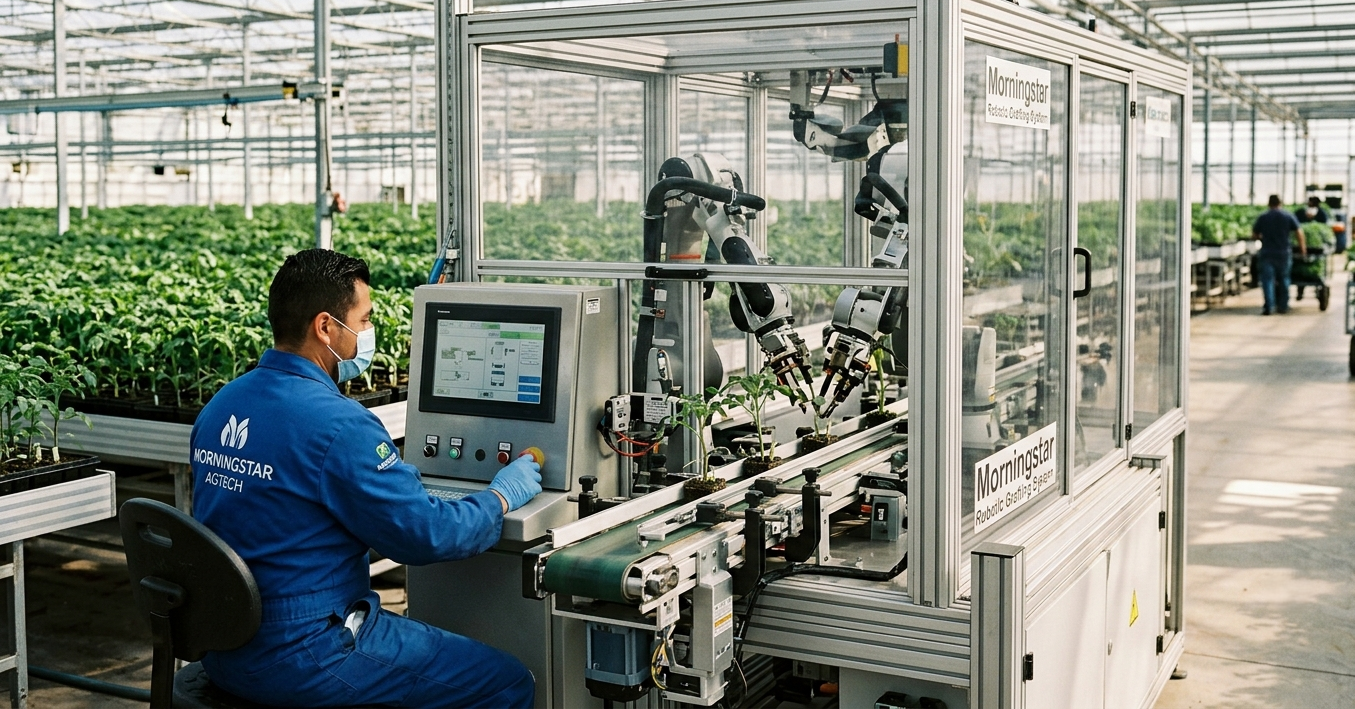
There are greenhouses and infrastructure to grow all of this, because the plants are already being cultivated, even the tomatoes intended for processing. But grafting machines are needed. Manual grafting works in some regions with very low wages, but in many places automation must be used. Morningstar, the largest tomato company in the world, based in California, in collaboration with a cutting-edge Silicon Valley company specializing in machine learning and computer vision, developed a machine that can operate with a single operator and graft 4,000 plants per hour.
This is becoming possible. This is what excites me: we are trying to develop, in effect, domestication, if you will, from wild relatives, with appropriate commercialization. As the icing on the cake, we no longer settle for producing tetraploids, but we also hybridize them. So we can create a first batch of tetraploids from two parents, obtain a tetraploid derived from the hybrid, then repeat the operation with two different parents, hybridize them, tetraploidize them, then obtain these two tetraploids and hybridize them again. Why not? We thus obtain four chromosomes, four sets of genomes, in a single seed. This makes it possible to rapidly accumulate complex polygenic traits, such as for example salt tolerance in Orobanky, now called Felopanky. This parasitic plant, which exhibits a complex polygenic trait, had never been integrated into commercial tomatoes before; it is now possible.
The principle is the same for resistance to ralstonia: complex multigenic traits for durable resistance to ralstonia, that bacterial wilt which represents a major problem. For fusarium wilt and verticillium wilt, also fungal diseases, we manage to integrate these resistances into the genome of a single plant. Provided that these resistances are dominant, genetically dominant, we have a chance of succeeding.
We are therefore able to do this very cheaply, less than 100 dollars, a genome sequence. We can carry out the complete sequencing of the genome, and that over several generations. We plan to do this over five, six, even seven generations. The genetic material is expanding rapidly, and as you can see here, in the F1 hybrid, the distribution is 50/50 for each of the two parents. If this distribution were stable, it would remain so, which is clearly not the case.
We observe a separation of the green and red lines from the center, which clearly indicates the presence of non-homeologous recombination events. Fortunately, aneuploidy is infrequent, but non-homeologous recombination is indeed present. It is essential to understand the molecular, genetic, or genomic basis of this phenomenon and to try to avoid it in the future in order to stabilize these lines. Apart from this point, the results are promising.
Developing rootstocks for other species
So that is an overview of our research. We are currently focusing on these tomatoes because we see that they could represent a major advance in many respects. These are, in my view, only a few important points to remember. I think that near-domestication offers many opportunities to make significant progress in agricultural production, and I believe that we can accelerate this process through genomics, and of course also through techniques like grafting.
I think that the development of rootstocks is applicable to a great many species, far more than we imagined, also making it possible to introduce some of these modifications from wild relatives. These interspecific allopolyploids, in my view, can generate robust lines with very economical seed production, which will greatly benefit farmers in marginal areas. Moreover, I think that the hybridization of these synthetic allopolyploids can induce what I call super-heterosis, because you obtain two series, two cycles of heterotic events, in addition to the vigor conferred by raw polyploidy. This also makes the approach more attractive to seed companies, on which we ultimately depend for the distribution of seeds to farmers, because they can thereby protect their seeds and keep their composition secret, which is entirely legitimate. I think that this opens the way to important paradigm shifts in many agricultural systems.
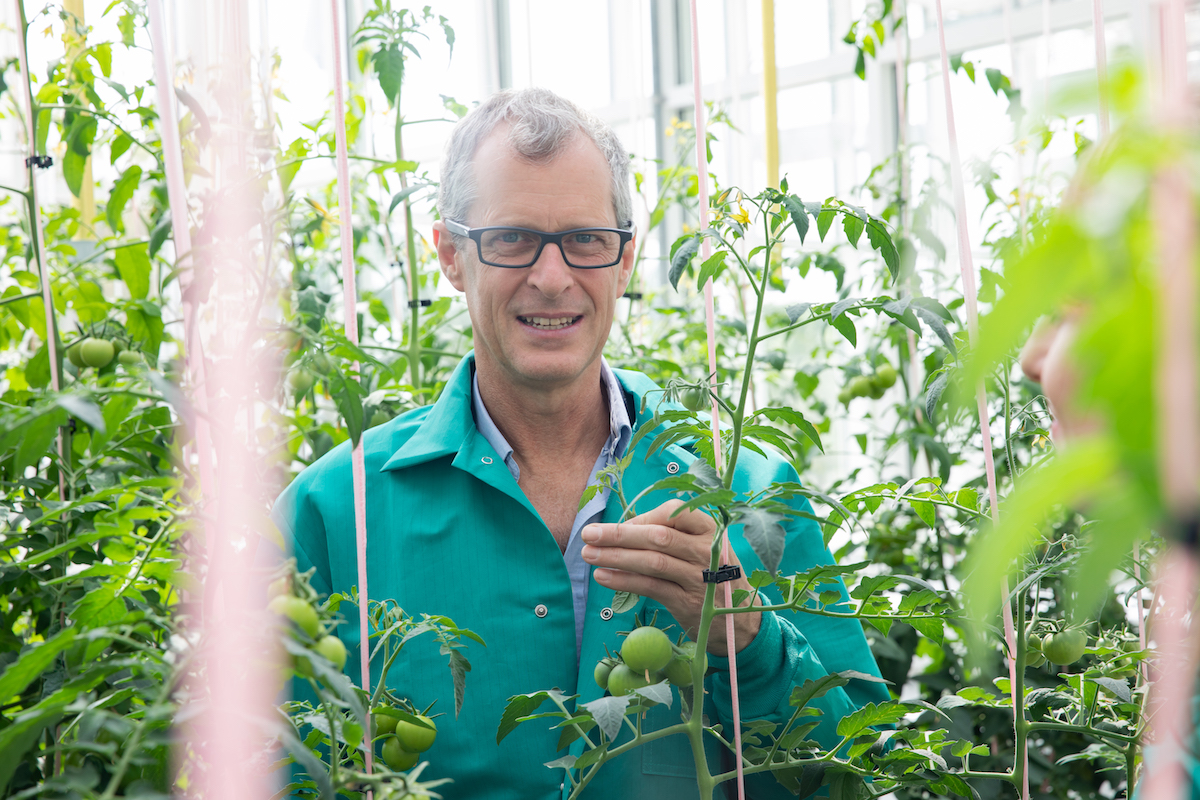
Biographie de Mark Tester
Mark Tester is an Australian botanist, a professor of plant sciences at King Abdullah University of Science and Technology, where he also serves as associate director of the Center for Desert Agriculture.