
Agrometeorology – which is not a new science – studies the impact of climate on agriculture and how agriculture influences the climate. However, its relevance has recently increased due to ongoing climate change and growing food needs. The core of my research is understanding climate change to provide practical advice for farmers and policymakers in Africa.
My research mainly consists of exploiting climate datasets to support climate-sensitive projects. Weather and climate affect all aspects of our socio-economic environment, with agriculture and water sectors being among the most affected.
Data is at the heart of climate studies. Their use is very complex. It depends on the tools and models we use to exploit them. Africa has fallen behind in climate research and its applications mainly due to data issues.
The value of data begins with the analysis of its availability and quality. Very often, the datasets are either unavailable or spread over too short periods of time to allow meaningful research. For climate change, for example, we need data for at least thirty consecutive years. This is a challenge for many countries.
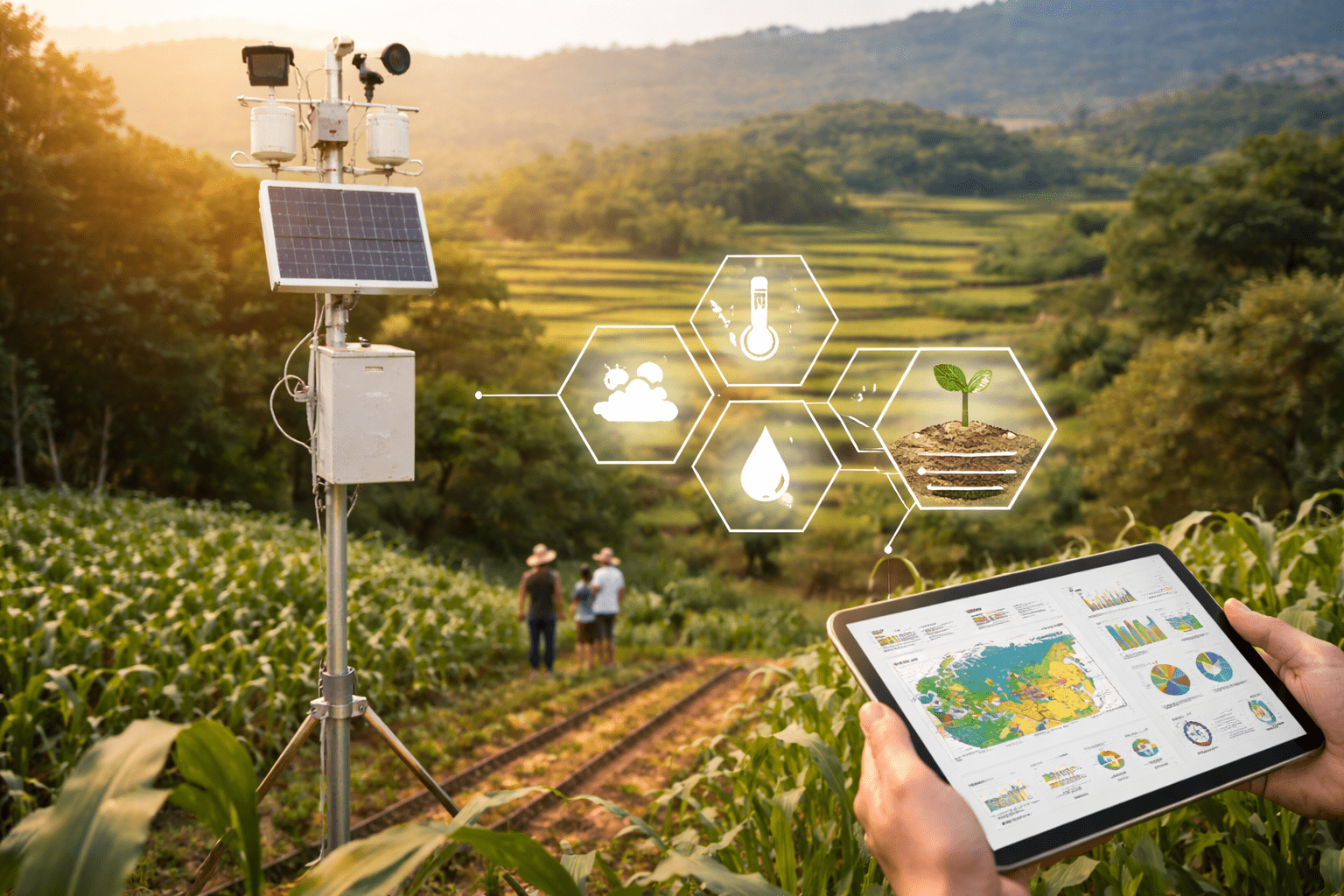
However, thanks to the latest developments, data acquisition, storage and processing have improved. In terms of acquisition, many initiatives are aimed at expanding the network of automatic weather stations. In addition, initiatives to digitize archived data from many meteorological centers around the world, particularly in developing countries and Africa, are underway.
Then, when it comes to storage, the development of AI and supercomputers has significantly improved the amount of storable data and processing speed. This is why UM6P is a nerve center for climate research in Africa. Having the fastest supercomputer on the continent gives it a leading position in the progress of this research.
Understanding the impact of climate on a given sector requires in-depth analysis. It is therefore essential to have the right data and tools to understand this impact. In most cases, for example in agriculture, we use datasets from climate simulations from many international climate centres.
Dissemination of good agricultural practices
From this data, we target our study area of interest. For example, we can focus on Morocco, Africa, or beyond. However, the reliability of this data is questionable in some areas.
In most cases, we correct the bias in the data for it to replicate the observed conditions. Concerning agriculture, and in particular the impact of climate change on crops, several tools and models are available, depending on the needs. In Morocco, for example, the most common process-based crop models are AquaCrop, APSIM and WOSOFT.
These models are widely used, not only in Morocco, but also in Africa and around the world. UM6P plays a decisive role in Morocco and on the African continent. In line with its 2030 vision, the University has put emphasis on applied research, innovation and entrepreneurship, mainly to address the challenges that affect not only Morocco, but also Africa as a whole. The most common challenges of concern are food security, health and energy. UM6P is playing a leading role in these areas.
Thanks to the partnership with OCP, we are carrying out many initiatives in Morocco and abroad to improve food security in Africa. In 2006, the Buja Declaration set a target of increasing fertilizer use in Africa from 8 kg per hectare to 50 kg per hectare by 2025. Today, ten years after this deadline, sub-Saharan Africa still uses only about 20 kg of fertilizer per hectare.
This shows that there is still a lot to be done. This is why UM6P, through OCP, is taking many initiatives. In particular, there are collaborations between UM6P, Moroccan institutions and other African institutions to advance research in these areas.
We are taking other initiatives, such as organizing workshops. For example, Bridge Africa brings together leaders from all over the world, especially those from African countries at UM6P in order to offer them a platform for the exchange of knowledge and, above all, its application in their respective fields. In addition, organizations like Moutmir work in close collaboration with farmers, aiming to increase food security in Morocco.
Currently limited to Morocco, the Al Moutmir program should be extended to Africa. This will be a major initiative to provide farmers with direct services on best farming practices, fertilizers, irrigation and other needs. All of these measures will contribute to improving food productivity.
Finally, when it comes to datasets, it’s crucial not only to acquire them, but also to store and process them quickly in order to extract actionable insights. UM6P is at the forefront of this field by having acquired the most powerful supercomputer in Africa. This supercomputer can store and process big amounts of data, and produce information that can be applied to agricultural practices to improve agricultural productivity.
Victor Ongoma’s research interests
Victor Ongoma is a meteorologist. His research focuses on:
-
- Climatology and climate change
- Climate services and sustainable development
- Climate extremes (occurrence, impacts and adaptation) in Africa, particularly East Africa
Advances in research in Africa for Africa and by Africa
Climate change is a reality, and its effects are being felt in almost all socio-economic sectors. They vary from one sector to another, and just as much according to the region. They are not the same in South or West Africa and North Africa.
Our level of vulnerability to climate change varies. It depends on many factors. The resilience of a country or region depends first and foremost on the resources at its disposal. Then there is knowledge and expertise. A good knowledge of the effects allows for an effective reaction. Finally, sensitivity to climate change depends on the socio-economic environment. For example, the situation is worse for most African countries whose agricultural systems depend on rain-fed irrigation.
Extreme weather events, such as floods and droughts, can jeopardize harvests leading to food insecurity. This is where climate action comes in: how do we manage this risk? How can we adapt to climate change while mitigating its effects? Several practices have been developed. They are starting to be offered to farmers to help them cope with them.
These practices most often concern irrigation, such as, for example, the transition from rain-fed agriculture to lightly irrigated agriculture. They can help overcome challenges such as frequent drought.
In addition, specialized training is put in place because, very often, decisions, especially those of farmers, are taken without sufficient information. Today, specialized training exists, not only in Morocco but throughout Africa to provide farmers with relevant information and help decision-makers make the right decisions.
Research is the other essential component. In recent years, for example, the reports of the IPCC (Intergovernmental Panel on Climate Change) have devoted little space to Africa. However, today, experts from developing countries are being called upon to write the reports in progress. This is encouraging for Africa. Young experts are encouraged to conduct relevant research on the state of Africa’s climate and publish it in high-level scientific journals for consideration.
This is an illustration of the concept of Africa for Africa by Africa. Measures are thus proposed to provide reliable and accurate information for decision-making. In summary, this concept is based on three pillars: financing, expertise and infrastructure.
More concretely, the latest research shows that in Morocco, and in Africa in general, the main obstacles to agricultural development are linked to inadequacies in terms of fertilizers, water (especially irrigation) and agricultural practices. In addition, with climate change the needs are changing and increasing. Thus, it is essential that farmers and policymakers have the information to support them in adapting to this change.
For example, we are participating in a project to improve yields. In this project, we start from the observation that the yield obtained by farmers is much lower than the maximum yield they could obtain, which is lower than the potential of their land. Knowing that the weak points are water and fertilization, we conduct field trials to determine the optimal combination of fertilizer and irrigation at the most favorable timing, that of sowing.
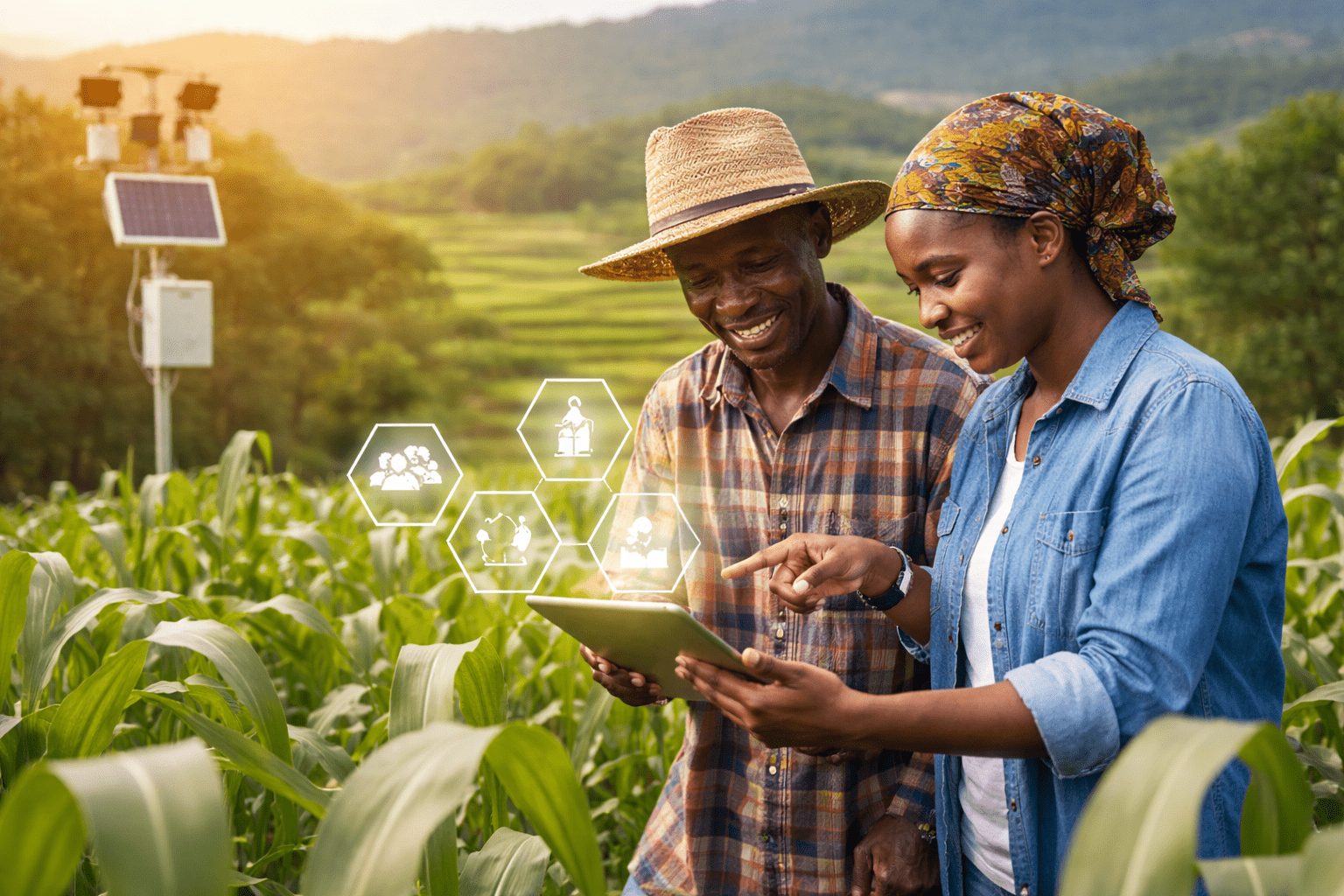
All this information is then injected into a platform and a mobile application. These allow farmers to know their geographical area, the yield of their cereal crops, the yield potential, the yield gap in their area and the measures they can implement to reduce it as much as possible. By closing the yield gap, we increase food production and improve food security. In fact, considerable progress has been made in agriculture in Morocco and in Africa in general.
Many initiatives are underway. In Morocco, for example, Al Moutmir is one of the largest organizations of its kind. Its members travel throughout the country to train farmers in good agricultural practices. Their work begins with data collection, assessment of the condition of farms, soils and fertilizers used. They then analyse this data, identify gaps in agricultural practices and provide timely advice to farmers. This is a considerable step forward increasing farm productivity. It is reinforced by technological advancements that have greatly simplified work and decision-making for farmers. Thanks to mobile applications, even farmers living far from the service provider Al Moutmir can access important information, such as climate and yield forecasts or the timing of rainfall.
Complexity of climate modelling
Mobile applications monitor the growth, germination and development of crops and thus their yield. Thanks to them, it is now very easy for a farmer to know, for example, when the rains are likely to start in order to determine the right time to plant and the anticipated seasonal rainfall. For instance, when the rains are normal, we know which crop to favor.
As part of the project we are working on to reduce the yield gap, we are developing a mobile application that includes other features. The latter has an e-commerce platform on which farmers can buy agricultural equipment, or even recruit laborers, and sell their products. This makes it much easier for them.
In addition, yield forecasting also plays an important role. Farmers and decision-makers can thus know, at the beginning of the season, two to three months in advance, the level of their yields. With this information, they can make the appropriate decisions. Policymakers will be able, for example, to import more food to feed the population. These are advances that have been made, not only in Morocco, but throughout Africa. I attribute all of this progress primarily to technological advancements.
Climate modelling is one of the most complex because it involves highly dynamic systems that are strongly influenced by human activities. Fortunately, we have data from many international climate centres. In any analysis, it is necessary to select the most reliable model simulations, as each model has strengths and weaknesses.
For example, a model may perform well in North Africa, but perform poorly in West or Southern Africa. If your research is for North Africa, you will need to select the most suitable model in order to find the one that accurately represents local conditions. You can then use it to make projections and related decisions.
The selection of models is based on their performance in relation to observed data. This underscores the critical importance of the data observed. This is the very foundation of research. We therefore start from observed data that we use to validate model performance.
Thanks to the chosen model, we can now simulate the future. Another approach is to use an average, which we call an ensemble mean.
Today, about fifty climate modelling centres around the world produce data on a global scale. One way to minimize uncertainty is to use the average of all these models. This provides a picture close to the observations, which allows reliable projections to be made.
African dilemma
Agriculture is a crucial topic today due to food insecurity amid population growth on the African continent. It is therefore necessary to increase food production. However, increased land intensification, if not well managed, can worsen climate change by increasing greenhouse gas emissions. This is where the concept of climate-smart agriculture comes in.
Today, we need to produce as much food as possible while limiting greenhouse gas emissions. This imperative influences crop choice and agricultural practices, not only adapting to climate change, but also mitigating it.
It is in this context that we study and recommend short-cycle crops. We also favour crops that require less water, because this resource is precious. We also favour crops and animals that emit less greenhouse gases. We must therefore achieve a win-win situation, a situation of co-benefits: reducing emissions while adapting.
Africa faces a climate dilemma and injustice. It suffers the effects of greenhouse gas emissions by developed countries while it is marginally emitting these gases. How, under these conditions, can we ask Africans, who are malnourished, to reduce their meat consumption?
Africa is now at a crossroads: it needs to increase its food production, which contributes to greenhouse gas emissions, and increase its energy supply, as many African households do not have access to electricity. However, any increase in electricity production – and food – depending on the source of energy used, can also increase greenhouse gas emissions.
The continent still lags far behind developed countries in terms of energy consumption and supply. Closing this gap risks increasing greenhouse gas emissions. They represent less than 5% of global emissions. Increasing energy use is inevitable. Luckily, Africa’s low emission rate leaves it room for improvement. Secondly, we have tools at our disposal to improve the sustainability of our agricultural production. It’s all about balance.
Biography of Researcher Victor Ongoma
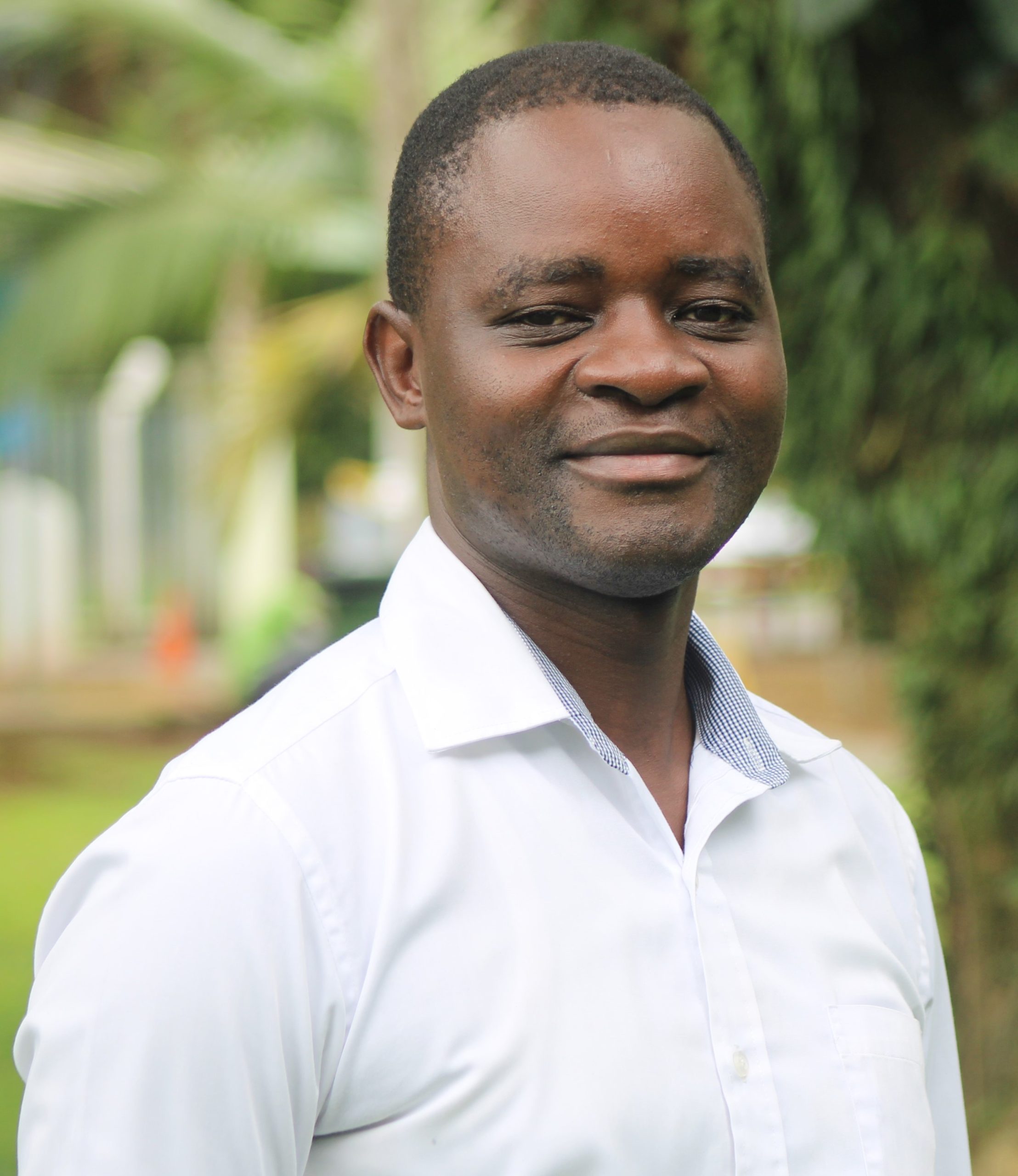
Victor Ongoma is a Researcher, Educator, & Author. He is an Assistant Professor at Mohammed VI Polytechnic University. Victor holds a PhD in Meteorology from Nanjing University of Information Science and Technology, China. His areas of interest are climatology, and climate change. His current research is on variability of extreme climate events, their impacts and adaptation over East Africa.