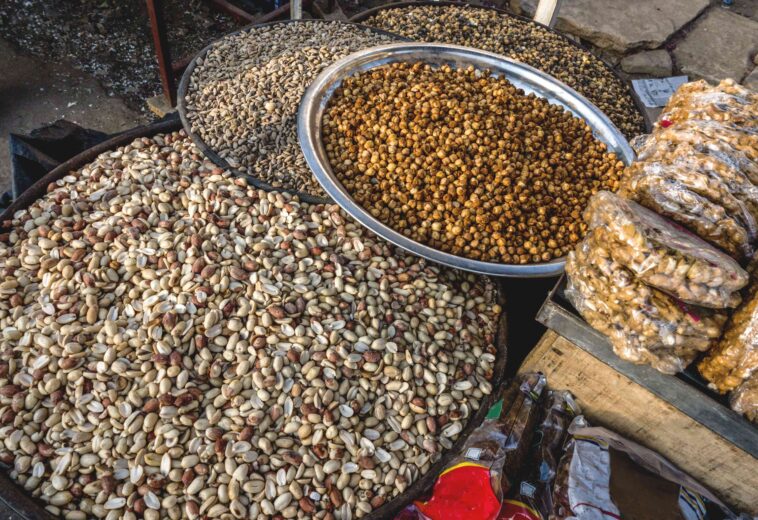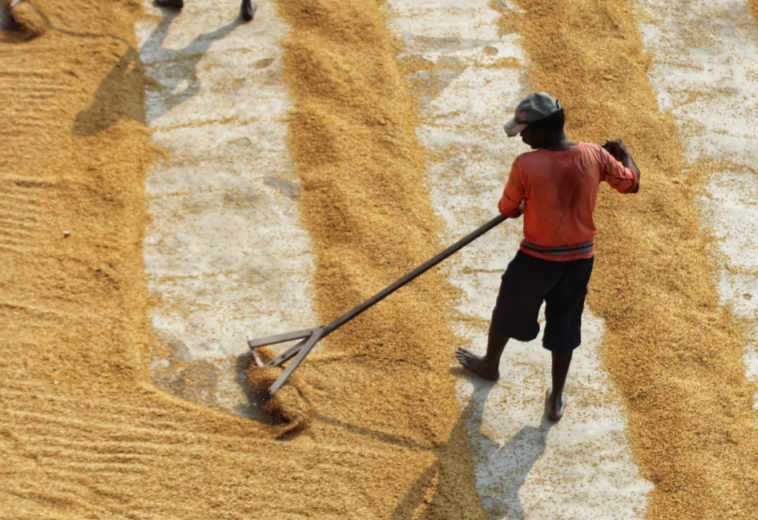

Cereals form the nutritional foundation of the human diet. They have played a central role in human history, agricultural systems and global food security. They provide an average of 42% of calories worldwide and 46% in Africa. In Africa, cereals are even more strategic than in many other regions. They are not merely a dietary staple: they underpin food security, the agricultural economy and, in many countries, social and political stability. Africa produces only 7% of the world’s cereals while accounting for 18% of its population. In other words, Africa derives 46% of its calories from cereals but produces only 7% of the world’s supply.
Cereals offer several fundamental advantages that explain their success:
- A major source of energy.
- A source of plant-based protein.
- Dietary fibre.
- Vitamins and minerals (B vitamins, magnesium, iron and zinc).
- Easy storage and transportation. This combination of nutritional, agronomic, economic and logistical qualities explains their predominant role.
Three cereals dominate global production: wheat, rice and maize. But other cereals, including sorghum, millet, barley, oats and rye, play a leading role in certain parts of the world, particularly Africa.
Beyond their nutritional value, cereals lie at the heart of four major global challenges:
- Food security: they supply a major share of the dietary energy consumed worldwide.
- Political stability: prices of wheat, rice and maize can trigger social tensions when they rise excessively.
- Geopolitics: major cereal exporters wield strategic influence over international markets.
- Climate change: droughts, floods, extreme temperatures and soil degradation threaten cereal production.
Africa’s greater cereal diversity
Unlike Europe or North America, Africa has a wide diversity of traditional cereals, some of which are currently undervalued. Their importance varies by region. Barley and wheat dominate in North Africa, while millet, sorghum, maize and rice are particularly common in West Africa and the Sahel. There is no single African model.
Rice is expanding rapidly in West Africa due to urbanisation and the accompanying changes in dietary habits. Sorghum and millet are strategic crops in arid regions. Maize is a major cereal in East, Central and Southern Africa.
Two particularly interesting cereals should be added: fonio, grown mainly in West Africa, and teff, essential in Ethiopia. These traditional crops deserve greater attention.
The African paradox
Despite its substantial production, extensive agricultural land and diverse agroecological conditions, Africa depends on imports to feed its population. According to the FAO, in 2023 Africa produced 95 million tonnes of maize and imported 17.2 million tonnes. The corresponding figures were 42.7 million tonnes produced and 17.1 million tonnes imported for rice, and 26.3 million tonnes produced and 41.8 million tonnes imported for wheat.
Wheat is a particularly revealing case: Africa imports more wheat than it produces. North Africa is especially affected, notably Egypt, Algeria, Morocco and Tunisia. This dependence comes at a high cost, as recent geopolitical crises illustrate (the Russia–Ukraine war or the closure of the Strait of Hormuz).
Millet, sorghum, fonio and teff offer several advantages. More resilient than wheat or maize, they can reduce Africa’s dependence on food imports. Yet these cereals are often neglected in favour of rice and wheat, which are associated with urbanisation, industrial food processing and changing consumption habits.
In much of Central and West Africa, roots and tubers—cassava, yam, sweet potato and plantain—play a more important role than cereals. For example, African cassava production reached approximately 213 million tonnes in 2023, compared with 95 million tonnes for maize.
Some important lessons:
- Cereals account for a larger share of the African diet than of the global diet.
- Africa nevertheless consumes fewer cereal-derived calories per person: 1,167 versus 1,280 kcal per day.
- Roots and tubers play a much greater role in Africa: cassava, yam, sweet potato and other products.
Dependence on cereals should therefore not be confused with dependence on all starchy foods.
Global cereal production does not correspond to the quantity actually consumed by humans.
According to the FAO, in 2023 cereals were used as follows:
| Use | Share of global use |
|---|---|
| Direct human consumption | 45% |
| Animal feed | 35% |
| Other uses | 20% |
Other uses include industrial applications, seeds and other non-food uses.
This means that global cereal production is also closely linked to livestock farming and the food-processing industry.
It should be stressed, however, that this breakdown is global and cannot be applied directly to Africa.
World trade
In 2023, cereal trade was as follows:
FAO data, 2023
| Cereals | African imports | African exports |
|---|---|---|
| Wheat | 41.8 Mt | 0.5 Mt |
| Maize | 17.2 Mt | 4.9 Mt |
| Rice | 17.1 Mt | 1.1 Mt |
| Other cereals | 4.0 Mt | 0.2 Mt |
| Total | 80.1 Mt | 6.7 Mt |
Source: FAO, Statistical Yearbook 2025, Table 35.
Some conclusions:
- Africa imports nearly 12 times more wheat than it exports.
- It also imports far more rice than it exports.
- Maize is the cereal for which African exports are highest, but they remain far below imports.
Africa’s gross cereal trade deficit thus amounts to approximately 73.4 million tonnes. By comparison, total global cereal imports amount to approximately 491 million tonnes in these statistics. Africa therefore accounts for around 16% of them.
Here is a summary of the main indicators of global and African production:
| Indicator | World | Africa |
|---|---|---|
| Share of calories from cereals | 42.4% | 45.7% |
| Cereal calories per person per day | 1,280 | 1,167 |
| Cereal production, 2024 | 3,133 Mt | 223 Mt |
| Share of global production | 100% | 7.1% |
| Cereal imports, 2023 | 491 Mt | 80.1 Mt |
| Cereal exports, 2023 | 505 Mt | 6.7 Mt |
Sources: FAO, FAOSTAT and Our World in Data.
Four important conclusions:
First: cereals are even more important in Africa than globally in terms of their contribution to calorie intake.
They account for nearly half of available calories. Any disruption to their production or supply can therefore have considerable consequences.
Second: the continent faces a structural imbalance between production and needs.
Its cereal production is relatively low in relation to its population and consumption. Population growth will intensify this pressure.
Third: trade dependence is particularly concerning.
Wheat and rice imports expose African countries to international crises, price fluctuations and decisions by major exporting countries.
Fourth: the solution is not simply to expand cultivated areas; yields must be improved, irrigation developed and traditional cereals revitalised.