
SWAT, Soil and Water Assessment Tool, is an agro-environmental model developed by the USDA (United States Department of Agriculture). It is a semi-distributed, physically based model recognized internationally for its ability to simulate hydrological processes, erosion, water quality, climate change impacts, and more.
The Three Strengths of the SWAT Model
- Comprehensive and flexible model: It can simulate physical processes such as flow, infiltration, erosion, nutrient transport, etc.
- Ideal for management scenarios: Particularly for evaluating the impacts of climate change and agricultural practices.
- GIS integration: It integrates well with geographic information systems through ArcSWAT or QSWAT.
Its use by a large scientific community reinforces its reliability. However, its main limitation lies in its strong requirement for high-quality input data (soil, climate, land use). Calibration can also be complex due to the large number of parameters to adjust. Additionally, some processes, such as groundwater dynamics, remain simplified.
Collecting Reliable Data
The quality of data is essential. A robust model only produces relevant results if the data is properly collected, verified, and prepared. We collect data through different institutions (water management agencies, ministries) and field surveys. SWAT requires adaptation to local conditions: climate variability, data availability, land use, soil types, agricultural systems.
We sample and analyze soil samples. We systematically verify field data before using it. We work over long time periods (sometimes over 10 years) with climatic, hydrological, land use, and vegetation cover data. The Digital Elevation Model (DEM) is crucial for topography. Satellite data is useful but must be validated in the field.
At the Heart of Professor Hamza Briak’s Research
His research lies at the intersection of hydrology, soil science, and environmental management, with a focus on Moroccan watersheds. Three pillars structure his work:
- Hydro-sedimentary modeling: Use of the SWAT model and the Modified Universal Soil Loss Equation (MUSLE) to predict flow and sediment transport.
- Impact of climate change and land use: Development of future scenarios to anticipate changes.
- Agricultural management practices (BMPs): Search for concrete solutions for sustainable agriculture.
Agricultural Management Strategies and Results in Morocco
In Morocco, the model has shown highly conclusive results in several watersheds (north, center, south). It has provided relevant results on hydrological balances, erosion, and the impact of climate change on water availability. It has helped better understand hydrological and sedimentary dynamics and propose agricultural management strategies to limit erosion and improve productivity.
SWAT is perfectly applicable at the scale of the African continent. Joint studies have already been carried out with colleagues in Algeria and Tunisia.
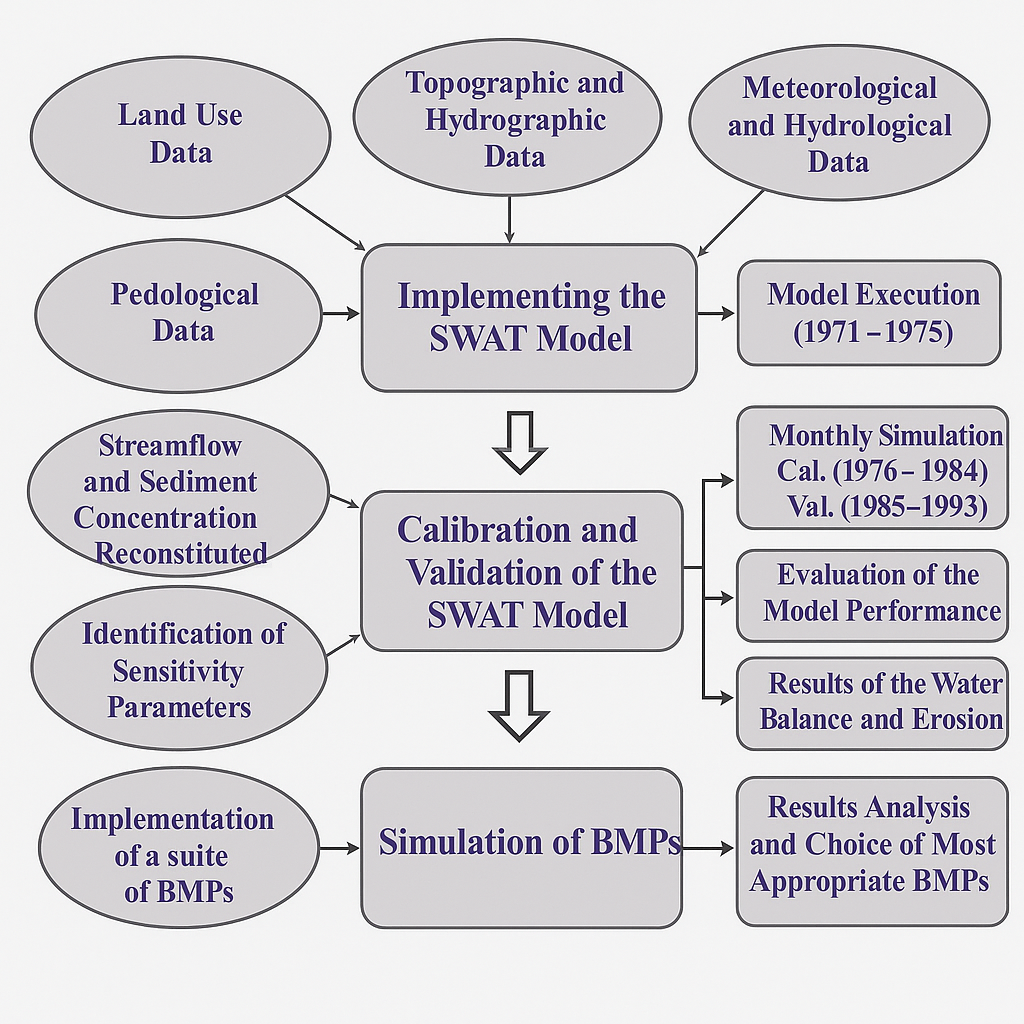
Steps of a SWAT study, from model initialization to scenario simulations *
A Decision-Support Tool
SWAT is a forecasting model that proposes several scenarios. It is a strategic tool for sustainable resource management (soil, water) and agricultural planning at different scales (national, continental), particularly in a context of climate change.
It is a decision-support tool for farmers and policymakers. It enables the design of different agricultural practice scenarios to study their impact on erosion and sediment loss. The analysis of results provides targeted recommendations (changes in practices in degraded areas). SWAT is not a day-to-day management tool but a strategic analysis tool.
It enables analysis of the impact of practices (fertilization, cropping systems, irrigation) on water quality. The results provide valuable support for sustainable agricultural policies. Our recommendations are published in open access.
Dissemination of Results
I conduct scientific work and provide public recommendations that are accessible to everyone. I have contributed to capacity building through the facilitation of doctoral training workshops (Sultan Moulay Slimane University, Mohammed VI Polytechnic University, INRGREF in Tunisia).
My recommendations are addressed to public authorities (policymakers) and farmers (best practices). Most of our articles are in open access. However, farmers do not always have the tools needed for direct implementation. The real challenge is the effective dissemination of results. Workshops and a structured framework would facilitate this transfer.
Organizations such as the Al Moutmir initiative of UM6P, in partnership with the Ministry of Agriculture, play a key role in supporting farmers and fostering innovation in the sector.
* Extract from Prof. Briak’s work on the impact of BMPs on sediments using SWAT. This work has been recognized with two international awards:
- Best Award of the “Young Researchers Days” at the Phosphate Days 2018 (UM6P, Morocco)
- Youth Outstanding Paper Award (Datum) 2018 in Moscow
Biography of Professor Hamza Briak
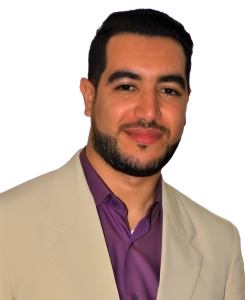
Hamza BRIAK is a professor and researcher in soil conservation and agro-environmental modeling at the College of Agricultural and Environmental Sciences (CAES) at Mohammed VI Polytechnic University (UM6P), with specialized expertise in sustainable management of water, soil, and crops.
An accomplished researcher with numerous publications in high-impact peer-reviewed scientific journals, he is a principal investigator (PI) and key member of collaborative and interdisciplinary projects focused on applying advanced modeling techniques to agricultural systems and environmental management.
He actively participates in seminars, conferences, and workshops, presenting cutting-edge advances related to climate change, water management, and sustainable agriculture. He has played a significant role in organizing international scientific events and serving on scientific committees.
Experienced as a peer reviewer, he leads training sessions on modeling techniques. He supervises undergraduate and graduate students and is recognized by prestigious awards for his contributions to research and innovation in soil conservation and sustainable farming practices.